No More USB Sticks: Seamless Presentation Management for Global Events
Streamline your global event presentations with m|events' seamless management system. Say goodbye to USB sticks and technical glitches for a flawless...
2 min read
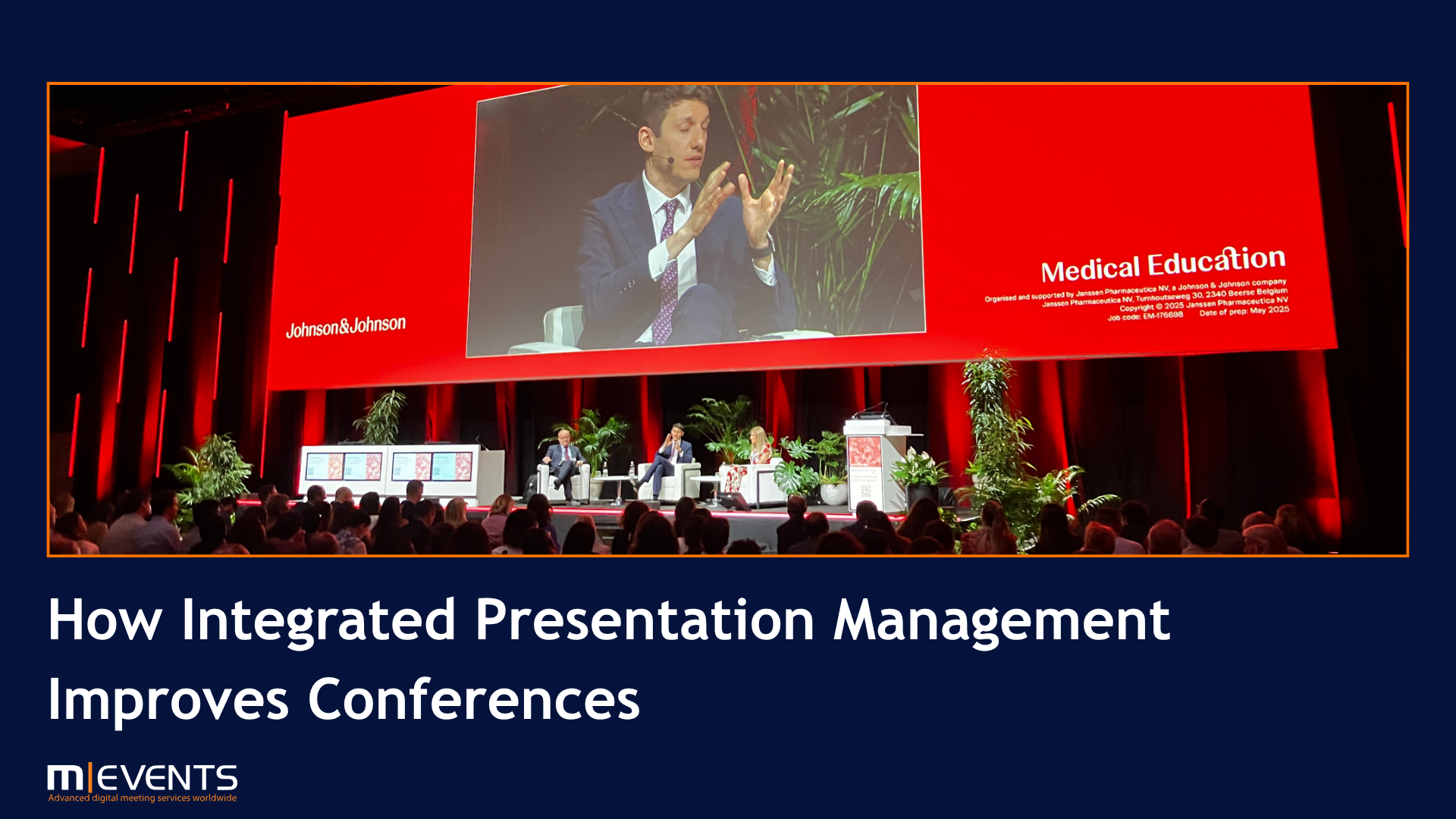
There's a good chance your conference already has a presentation management system. Speakers get a portal link, files come in, somebody handles the rest, and the event happens on schedule, with varying degrees of backstage chaos the attendees never see and your team never forgets.
If "somebody handling the rest" means manually routing files to rooms, chasing AV technicians to confirm they have the right version, or updating signage after a schedule change your presentation system already knows about but can't communicate downstream, that creates a mess your team has to clean up.
The silo you didn't know you built
"Centralized" and "integrated" are not the same word. Most presentation management systems are marketed as one, but are actually the other.
A centralized system collects. An integrated system acts. It knows which session a file belongs to, which room that session is in, which technician is covering that room, and whether the version on the server matches the one the speaker emailed at 6:58 AM because she found a typo on slide 14. When those things connect, the updated file routes automatically. When they don't, the 6:58 AM email becomes a phone call, the phone call becomes a runner with a USB drive, and the runner becomes a technician swapping files at the tech table while forty-two people settle into their seats.
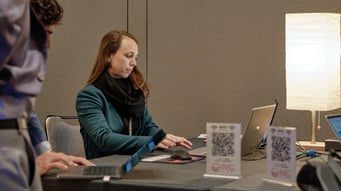 The gap between centralized and integrated is, in practice, a person. Often several. Conference staff become the connective tissue between systems that were never designed to talk to each other, manually cross-referencing upload portals against schedules, confirming files made it to the right rooms, and fielding calls from speakers who aren't sure their revision went through. A quiet systems architecture problem, dressed up for years as a staffing problem.
What truly strengthens the system
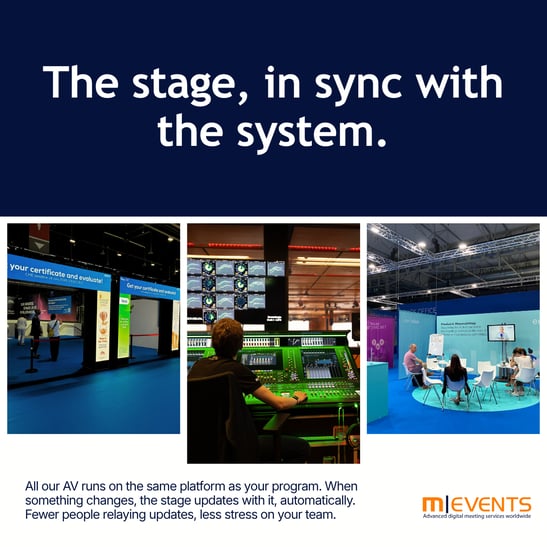
 For associations evaluating presentation management options right now, the meaningful difference is not whether a platform can accept uploads or organize speaker files. Most can. The difference is whether the system strengthens the entire conference operation around those files. M Events does that by connecting abstract and speaker data to onsite presentation delivery, AV workflows, signage, recording, on-demand access, and CME tracking, so each part of the meeting draws from the same source instead of relying on separate tools and manual handoffs.
What actually changes when the system is connected
When presentation management integrates with the rest of your conference technology, a specific category of tasks stops being tasks, and your team sleeps easier the night before.
File routing happens automatically: a speaker uploads once, intake verification runs, and the file arrives at the correct session and room without a USB drive or confirmation email. A last-minute revision replaces the previous version at the source, no manual handovers needed.
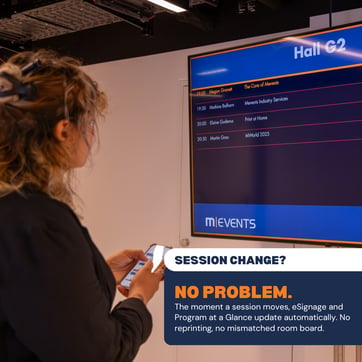
Schedule changes stop requiring emergency calls to technicians: when a session moves, the connected system handles the downstream updates: signage, AV interface, session listings. One update instead of four vendor notifications plus a follow-up to confirm the changes landed.

Speaker data stays consistent from abstract to archive: the presenting author's name, credentials, and session details read the same on the room display, the on-demand recording, and the CME certificate, because all of them draw from the same source. No manual checking, no corrections after the fact.
Scaled to the meeting, not the other way around
Integration doesn't mean every association needs the same level of production. A 200-person regional meeting and a 10,000-person annual conference shouldn't run through identical setups, which is why the platform is built in tiers. A smaller program gets the same connected system without paying for a smart stage build it doesn't need, and a larger one scales production without switching platforms to get there.
The point isn't more infrastructure. It's the right amount of infrastructure, fully connected either way.
The honest question
If your presentation management system were fully integrated with your conference tech stack, what would your team be doing instead?
Presentation management should be the hub the rest of your conference technology speaks to.
To see how M Events' presentation management system integrates across your full conference tech stack, visit m-events.com or reach out directly at sales-us@m-events.com or +1 (703) 448-0445.
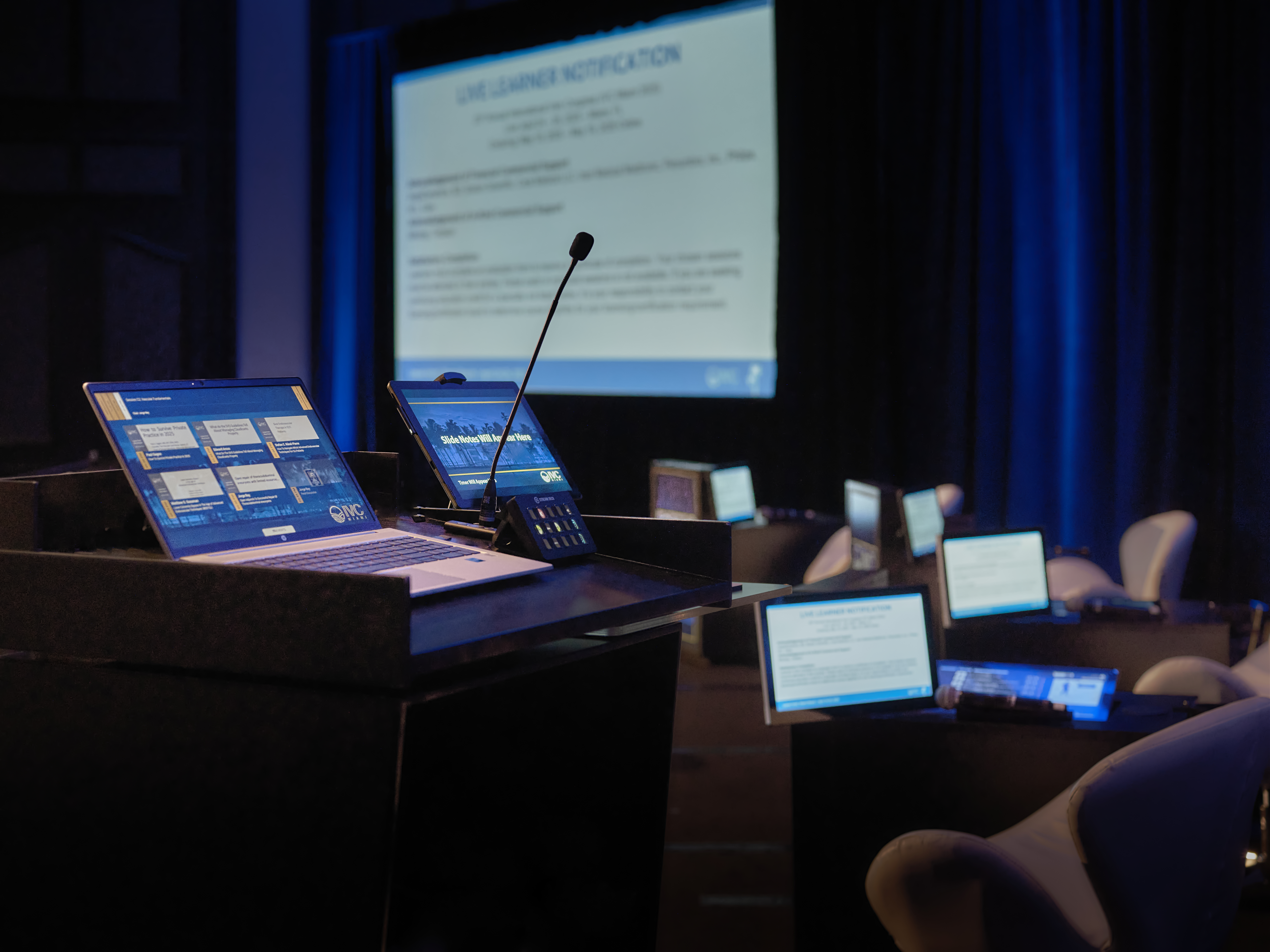
Streamline your global event presentations with m|events' seamless management system. Say goodbye to USB sticks and technical glitches for a flawless...
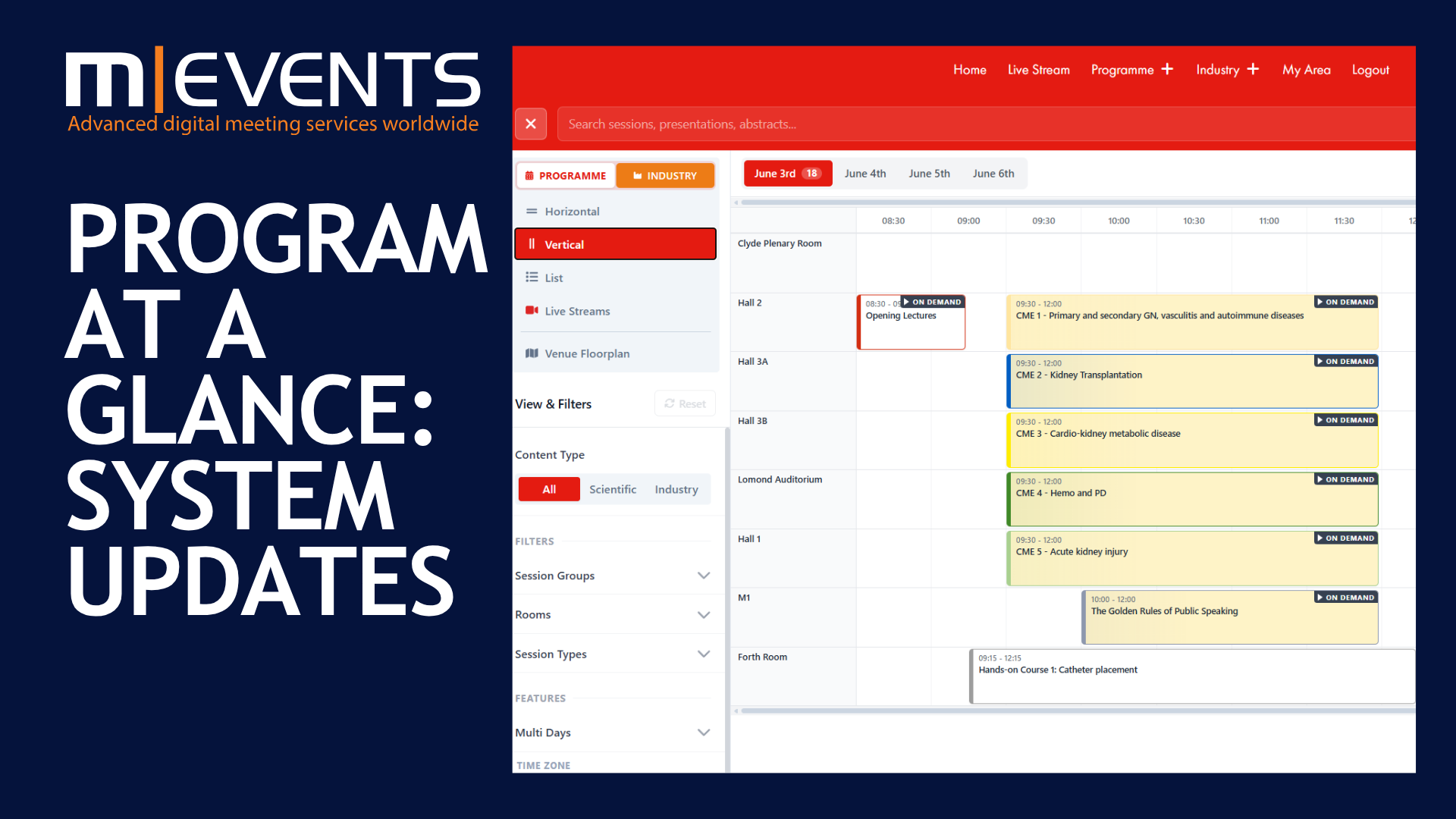
Discover the enhanced Program At a Glance, featuring five configurable views, improved mobile access, and a user-friendly admin tool for a seamless...
Discover how AI in event technology is revolutionizing educational conferences, bridging the gap between in-person and virtual learning experiences...